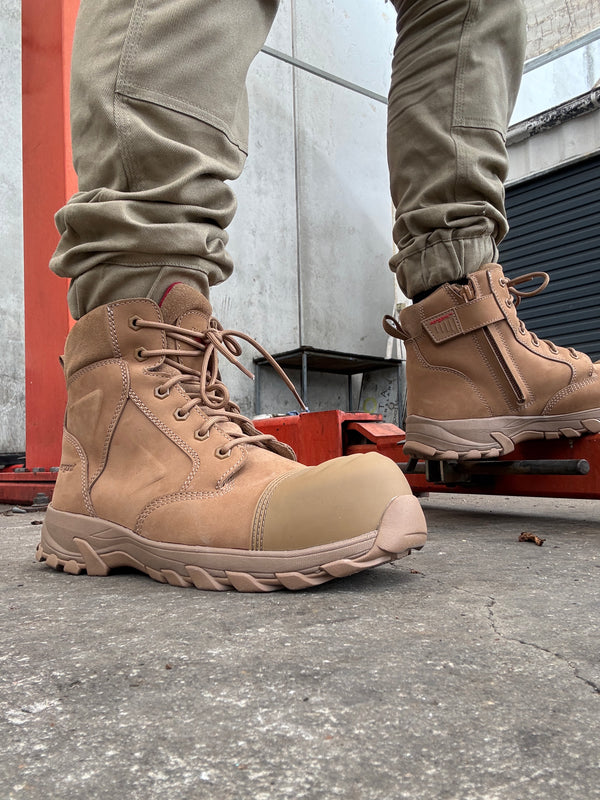
Ergonx Safety Boots Lace Up (Helium) All Tan
$249.95


Ergonx Womens Work Boots All Tan (Helium)


Women’s safety work boots with podiatrist-designed orthotic support. The Ergonx Women’s Helium All Tan combines a dedicated women’s fit, adjustable laces and an internal side zip with a lightweight composite safety toe.
Available in US women’s sizes 6–11 in the sizes listed above. Use the US Womens selector and the product-specific size guide to compare foot length, AU/UK and EU measurements. Wear your usual work socks when checking fit.
Read our women’s work boot fit guide, compare all work boots, or explore boots for construction and warehouse work.
Heel Counter Material
Yes - 2.0mm A grade thermoplastic - Rigid
Steel free?
Yes
Safety toe material? Fibreglass composite + scuff protector
Upper material?
Full Grain Leather
Lining Material?
Moisture Wicking Mesh
Outsole / Midsole material? EVA Shock absorbing + anti slip
Torsional Stability (Shank)
Yes - Very rigid embedded shank
Penetration Resistance
Yes
Antistatic
Yes
Slip Resistant
Yes
Resistance to Hot Contact
Yes
Resistance to Fuel Oil
Yes
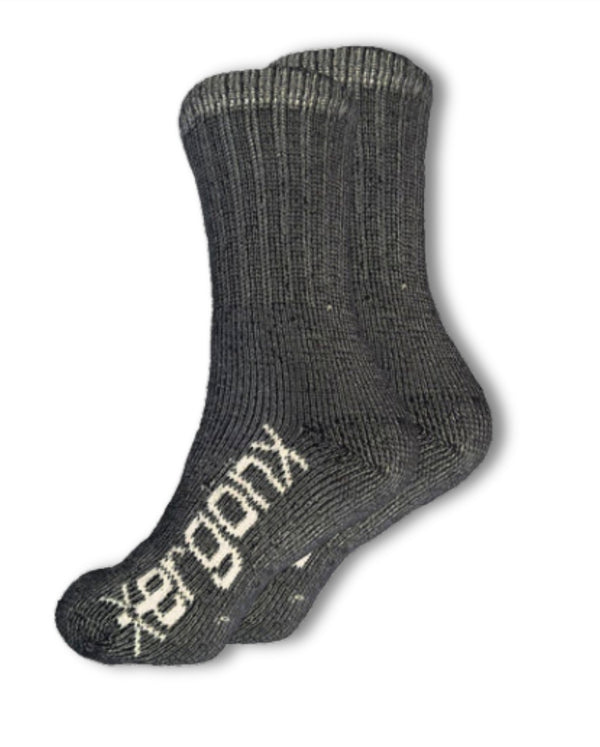
$29.95
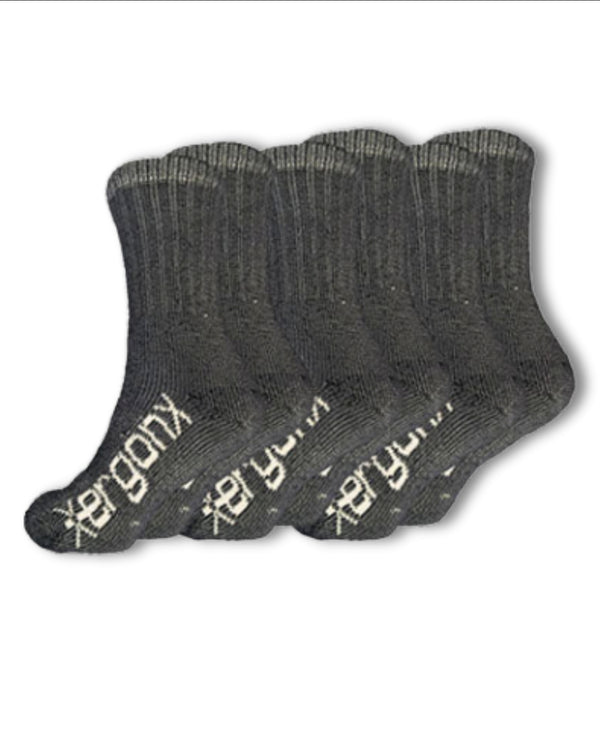
$179.70 $99.95
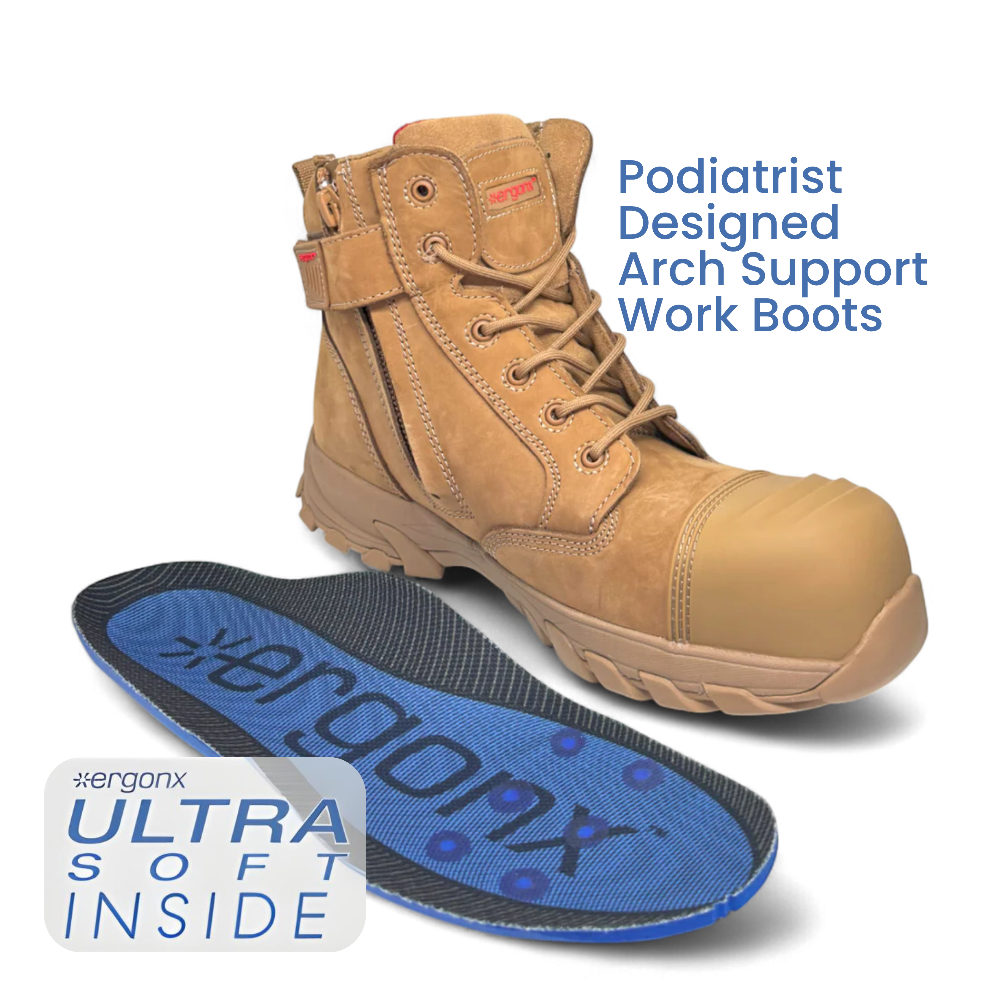
PODIATRIST RECOMMENDED WORK BOOTS
The arch support insole is designed to cushion and support the foot during wear. Fit and comfort vary between people. Supportive footwear may help manage discomfort, but it does not prevent or cure every cause of foot pain.
It’s what’s on the inside that counts!
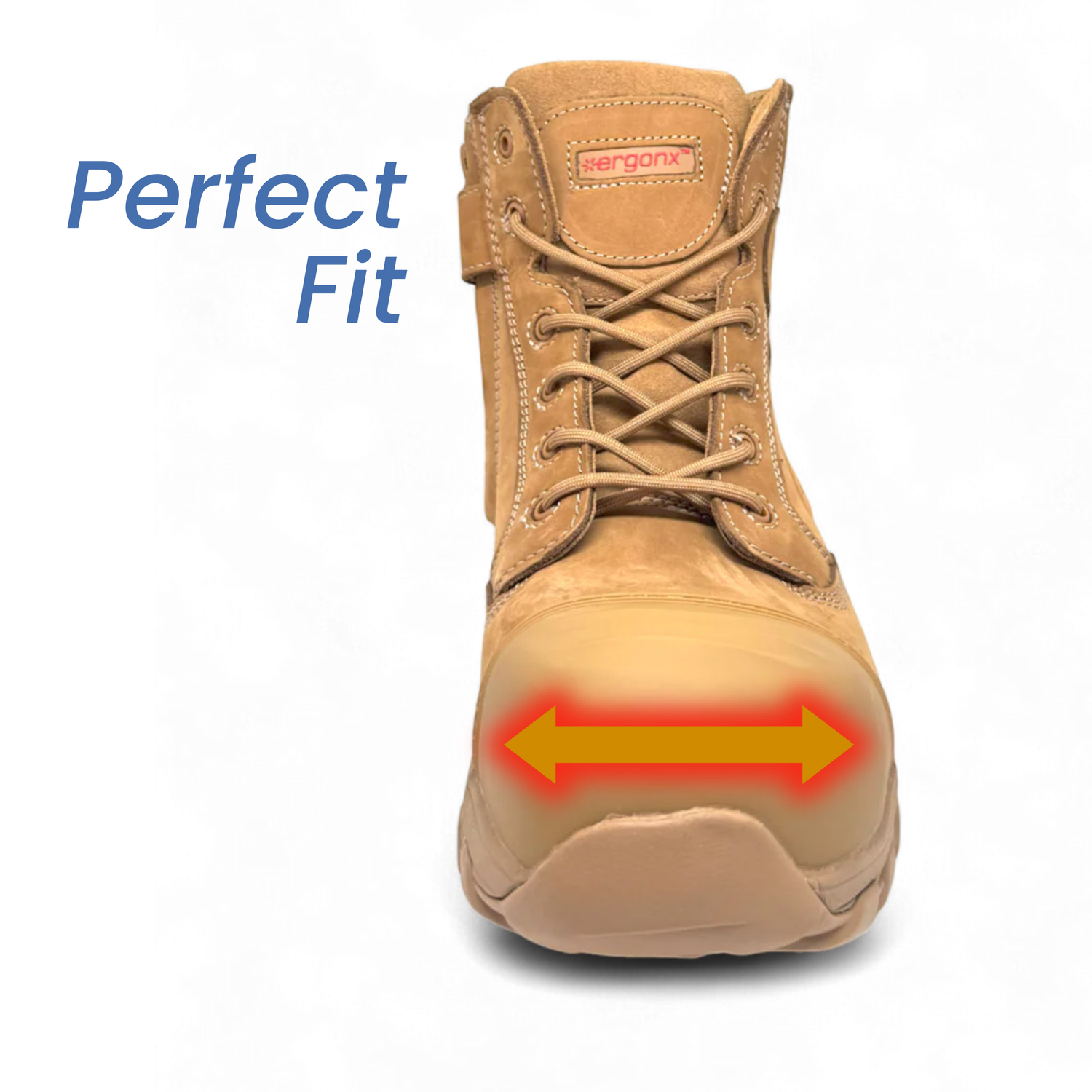
Roomy toe area
The women’s Helium has a dedicated women’s fit with a secure heel and room for your toes. Check the women’s size guide, wear your usual work socks and adjust the laces for a comfortable fit. This model does not offer separate 2E and 4E width variants.
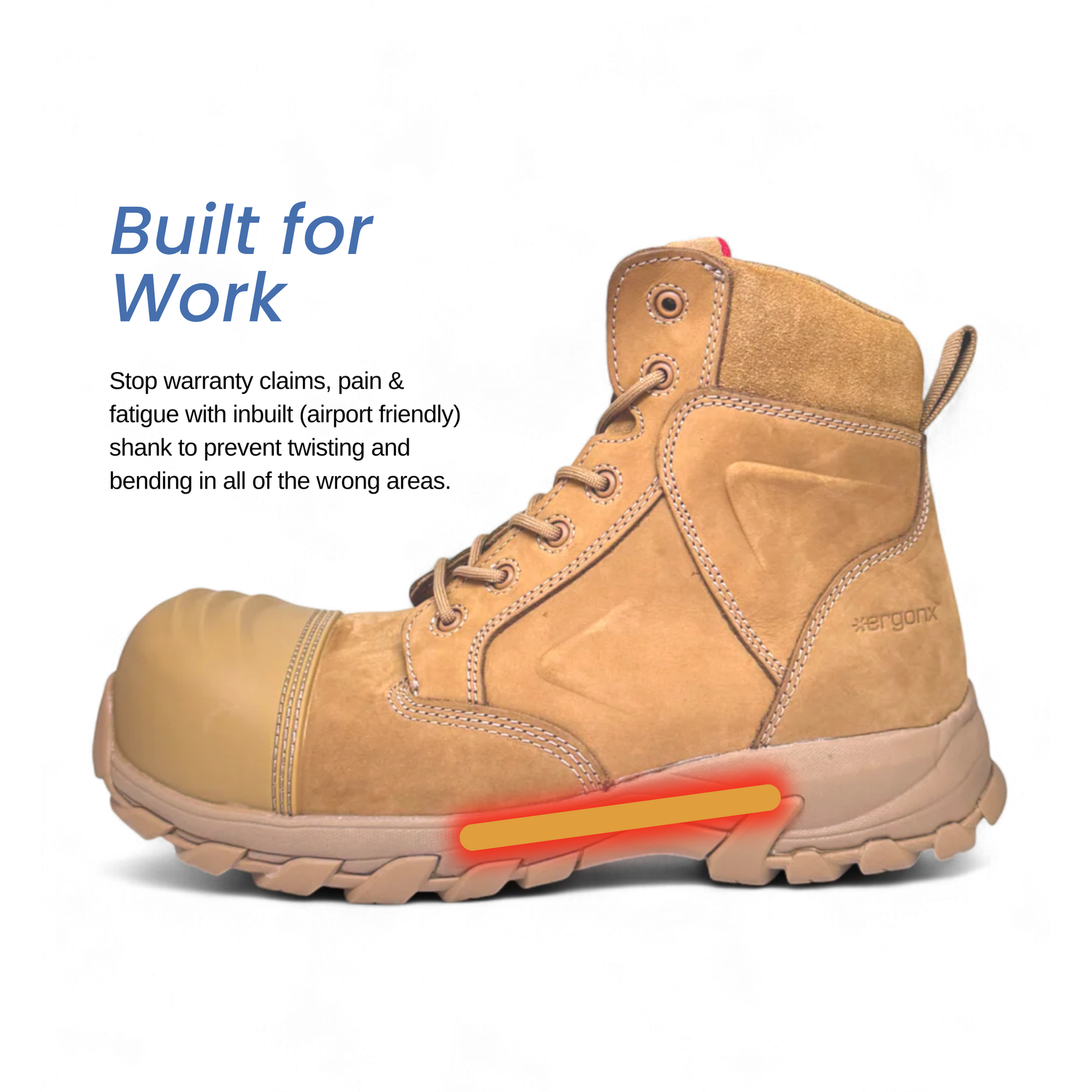
Built for Work
Stop warranty claims, pain & fatigue with inbuilt (airport friendly) shank to prevent twisting and bending in all of the wrong areas
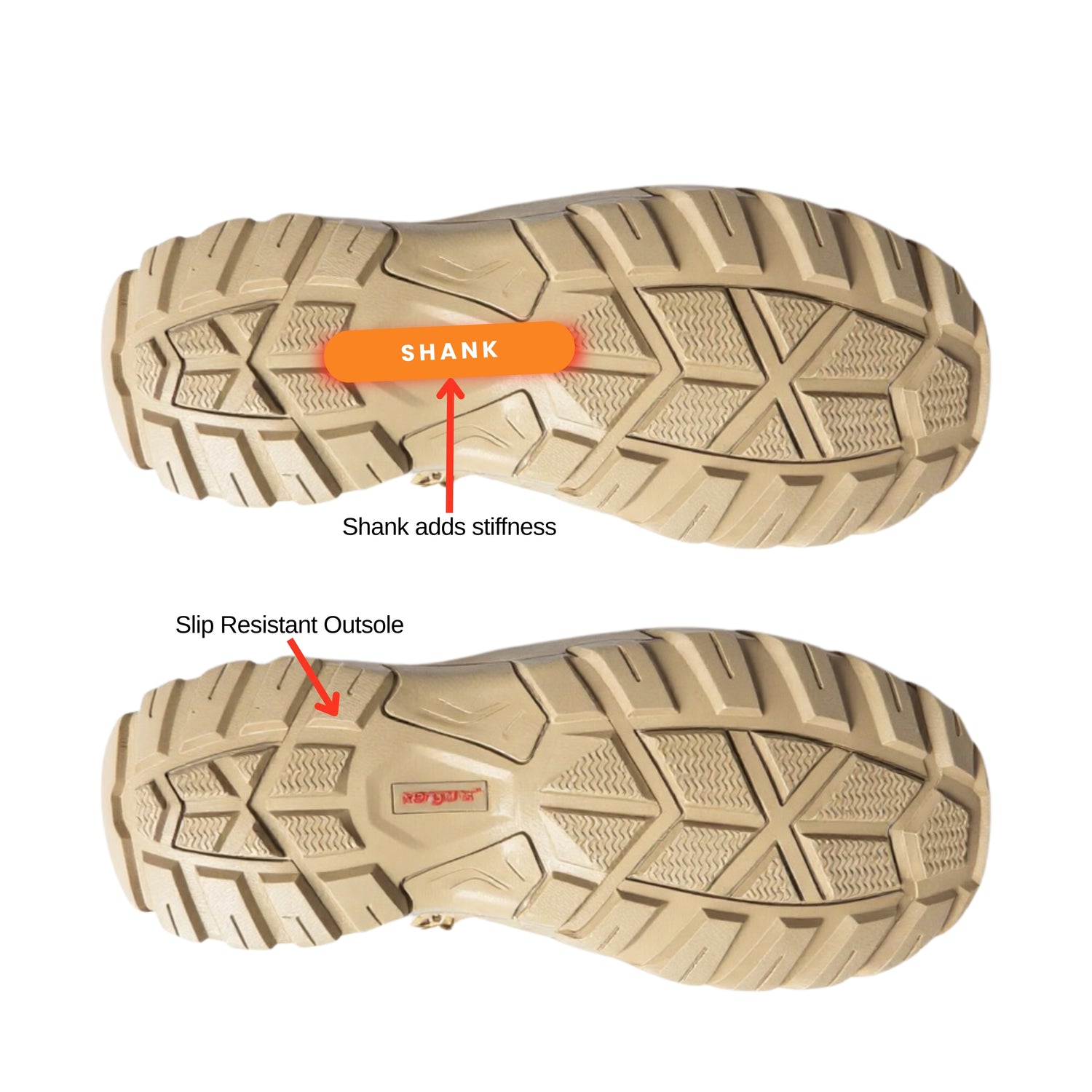
AIRPORT FRIENDLY BOOTS
We have modernized the traditional steel shank by changing the material to polypropylene to make it airport friendly and lighter. The shank helps to add stiffness to the boot which helps to reduce strain over the middle of the foot and prevent foot pain.
Uneven ground can be difficult to work on, so when working on rough or uneven job sites it is best to have a more rigid boot that works with the natural movements of your feet. The embedded shank adds stiffness only allowing bending where your foot bends.
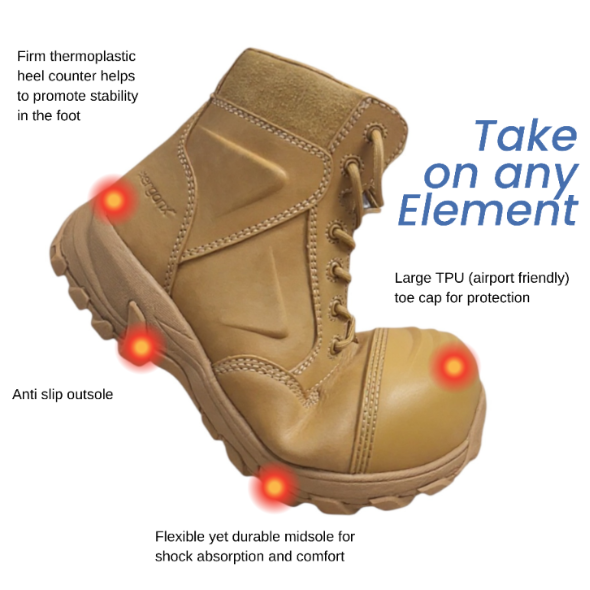
Made to move
The lighter the shoe the less work you do carrying the boot around the site. While it is difficult to keep the weight of a boot with so many features down, our work boots are at the lighter end of the weight range. This will help to limit fatigue at the end of a long day.
Composite Toe Cap / Steel Cap Equivalent: We have replaced the traditional steel cap with a composite protective toe cap. The steel cap in most modern safety boots has been replaced with a composite cap. P = Penetration resistance: Penetration resistance plate included in the footwear. A = Antistatic: To prevent the build-up of electricity to cause a spark. E = Energy Absorption: Extra shock absorption under the heel. SRA = Slip Resistant: Slip Resistant ‘Ceramic tile with sodium lauryl sulfate’ HRO = Resistance to Hot Contact: The outsole does not melt, char, crack or craze when coming in contact with the 300℃ surface for one minute. FO = Resistance to fuel oil: The increase in the volume of the outsole shall be not greater than 12% after immersing in the fuel oil for 22 hours.
The footwear protects the wearer’s toes against the risk of injury from falling objects when worn in industrial and commercial environments where potential hazards occur with the following protection plus, where applicable, additional protection. What: Australian & NZ Standards AS 2210.3:2019 Standard. To test the safety toe /safety shoe with a drop strike test machine at an impact energy of 200 Joule, the clearance under the toecap shall be by the standard of different sizes. Where: Toe
The footwear protects the wearer’s toes against the risk of injury from crushing when worn in industrial and commercial environments where potential hazards occur with the following protection plus, where applicable, additional protection. What: Australian & NZ Standards AS 2210.3:2019 Standard. To test the safety toe with the plate of the compression machine until the load of 15000 Newton has been reached, the clearance under the toecap shall be by the standard of different sizes. Where: Toe
The penetration-resistant component is tested under specified conditions; it does not eliminate every puncture or injury risk. What: Australian & NZ Standards AS 2210.3:2019 Standard. To test the whole sole assembly using a truncated nail of diameter 4,5 mm and a force of 1100 N. Where: Penetration resistance insert
Static electricity finds ground through the boots. The purpose is to prevent the build-up o causing a spark. What: Australian & NZ Standards AS 2210.3:2019 Additional Classification. Antistatic Footwear. After conditioning in a dry and wet atmosphere, the electrical resistance is above 100kΩ and less than or equal to 1000kΩ. Where: Through the sole and insole of the boot. E: Energy Absorption Benefit: Superior shock absorption under the heel. See ‘Cushioning’ below for more details. What: Australian & NZ Standards AS 2210.3:2019 Additional Classification. Energy Absorption of Seat Region. Passes the test for shock absorption under the heel. Where: Under the heel
Slip resistance is tested on ceramic tile with the specified solution; it does not guarantee that a wearer will not slip or fall. What: Australian & NZ Standards AS 2210.3:2019. SLS (soapy water) solution on ceramic tile test. The slip resistance coefficient o contact is ≥0.28, and the slip resistance coefficient with whole shoe flat contact is ≥ 0.32. Where: Outsole
Ideal for people occasionally stepping on hot surfaces/objects while working. What: Australian & NZ Standards AS 2210.3:2019 Additional Classification. Resistance to Hot Contact. The outsole does not melt, char, crack or craze when coming in contact with the 300ºC surface for one minute. Where: Outsole FO: Resistant to Fuel Oil Benefit: For people stepping on the floor with fuel oil while working. What: Australian & NZ Standards AS 2210.3:2019 Additional Classification. To immerse the outsole in the reagent for 22 hours, the increase in volume shall be not greater than 12%. Where: Outsole


